Think about the children who are thriving in their careers today. Yes, most of them had good grades, but that was not the only reason they turned out well. It was all because of the development at school, through which they learned to manage their emotions, work as a team, speak up, handle pressure, and keep going when things got tough. It is not just about scoring well in exams. It is about raising children who are prepared for real life, not just for report cards. But how can you do that?
So let’s break it all down, everything in this blog for you about what student development in school actually looks like, why it matters, and how both schools and parents play a role in it.
What is Student Development in School?
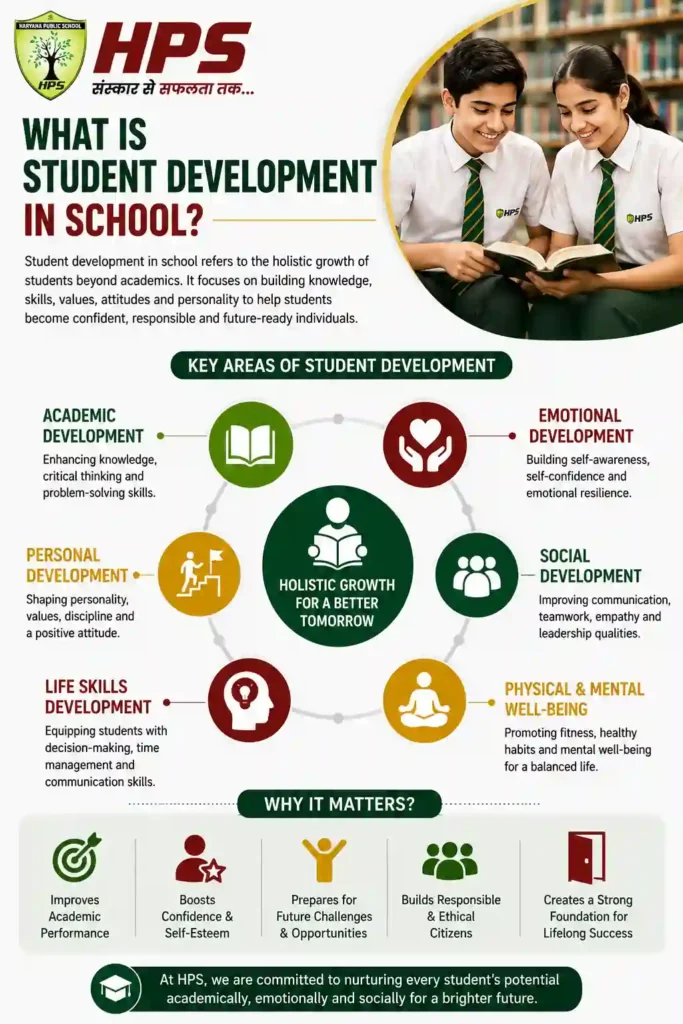
Student development in school is not just about how much information a student can memorize. Instead, it’s a multifaceted process where a child grows intellectually, emotionally, socially, and physically. It moves away from the old idea that a student’s only job is to memorize and reproduce facts. Instead, it focuses on building the whole child.
Academic Development: Building Strong Educational Foundations
Academic development is the foundation. It includes your child’s ability to read, write, think critically, solve problems, plus understand core subjects like Maths, Science & English Language with good grades.
However, good and balanced academic development is not just about marks. It is about building genuine curiosity and the ability to learn independently. When your child starts asking questions, connecting ideas, and finding solutions on their own, that’s when real academic growth is happening. As a parent, you should support it by creating a study-friendly environment at home and showing genuine interest in what your child is learning.
Emotional Development: Why It Matters as Much as Academics
Emotional development means your child learns how to identify their feelings, handle disappointment, manage stress, and stay motivated even when things do not go as planned. In today’s high-pressure world, this is not optional. It is essential. Your child needs to know that it’s okay to fail, and that failure is just the first step toward trying again.
Social Development: Learning to Work and Grow with Others
Your child is going to spend their entire life working with other people. Social development is what prepares them for that. Through group projects, classroom discussions, team activities, and even the small moments during lunch breaks, your child learns how to communicate, resolve conflicts, share responsibilities, and respect different perspectives. These experiences shape their ability to form friendships and professional relationships later in life.
Physical Development: Role of Sports and Health in Student Growth
A healthy body supports a healthy mind. Physical development through sports, outdoor play, yoga, and physical education classes does far more than keep your child fit. Sports teach discipline, teamwork, time management, and how to handle both winning and losing with grace. Regular physical activity also reduces stress, improves concentration, and helps children sleep better, all of which directly support academic performance.
Encourage your child to participate in at least one sport or physical activity at school. It is not a distraction from studies. It is what makes everything else work better.
Life Skills Development: Preparing Students for Real Life
Life skills include decision-making, communication, financial awareness, time management, critical thinking, and problem-solving. These are the skills your child will use every single day after graduation, in their jobs, relationships, and daily responsibilities. Schools that include life skills in their curriculum help students understand need of moral education and things like how to plan their time, how to speak confidently, how to handle peer pressure, and how to think through a problem before reacting. These lessons may not appear on a mark sheet, but they show up everywhere in real life.
Role of Schools in Student Development
A school’s role in student development goes far beyond delivering lessons. The environment a school creates, the values it promotes, and the relationships it builds with students have a lasting impact.
Good schools train their teachers to observe each child individually, not just as a group. They create space for creative thinking, encourage healthy discussions, and ensure that every child feels valued and not just the toppers.
Extracurricular activities, counselling support, parent-teacher communication, and a structured yet flexible curriculum are all of these are tools schools use to ensure that every student grows, not just academically but as a complete individual.
Role of Parents in Supporting Student Development
You are your child’s first and most important teacher. What happens at home shapes everything that happens in school.
When you talk to your child about their day, not just their homework, you support their emotional development. When you let them solve small problems on their own without jumping in immediately, you build their confidence. When you model good habits like reading, punctuality, and healthy living, you teach life skills without saying a word.
A few things that you should keep in mind while supporting your child’s development: Stay in touch with your child’s teachers, attend school events, celebrate small efforts, not just results. These small acts make a huge difference in your amchild’s overall development.
Why Balanced Development is Important (Academics + Skills)
Do you want your child to score 95% in school but struggle to manage stress, make friends, or take initiative at work? Or would you prefer a child who scores decently, handles challenges well, communicates confidently, and keeps growing throughout their life?
The answer is obvious. Balanced development means your child is not just prepared for their next exam but for the next 50 years of their life. Academics give them knowledge. Skills give them the ability to use that knowledge. Together, they build a truly capable individual.
Benefits of Proper Student Development
Let’s understand in detail some of the benefits of student development:
- Better academic performance: This is because emotionally balanced and socially confident students focus better on academics.
- Stronger relationships: Social skills learnt in school translate into healthy friendships and teamwork.
- Greater resilience: Kids who are taught to handle failure keep trying instead of giving up.
- Higher career readiness: Life skills and communication prepare your child for the workplace long before they get there.
- Improved mental health: Kids who feel seen, heard, and supported are less likely to struggle with anxiety and low self-esteem.
Final Thoughts: Building Future-Ready Students
Student development in school is not a side activity. It is very important for the overall growth of the child. The grades matter as well as the child behind those grades.
When a school gets this right, it creates young adults who are not just qualified on paper but genuinely prepared for life. They are confident, curious, empathetic, and capable of handling whatever comes their way.
At HPS Narnaul, we believe that every child deserves an education that builds them completely academically, emotionally, socially, and physically. Because in the end, it is not just about getting them into a good college. It is about helping them build a good life.
FAQs
What is student development in school?
Student development in school refers to the all-round growth of a child across academics, emotional well-being, social skills, physical health, and life skills. It prepares students not just for exams but for real life.
Why is holistic development important for children?
Holistic development ensures that a child grows in every area, not just intellectually, but emotionally, socially, and physically too. This makes them more capable, resilient, and prepared for adult life.
What skills should students learn in school?
Students should learn critical thinking, communication, teamwork, time management, problem-solving, emotional regulation, and basic life skills alongside their academic subjects.
How do schools support overall child development?
Schools support overall development through quality teaching, extracurricular activities, sports programmes, counselling, collaborative learning, and a safe, inclusive environment where every child feels valued.
What is the role of parents in student development?
Parents play a crucial role by staying involved in their child’s school life, creating a supportive home environment, encouraging effort over results, and instilling the values and habits they want their child to develop.