
Imagine your child studying in the most expensive schools and scoring good marks. Yet, all this can go to waste if they don’t know how to behave respectfully, act kindly, and contribute positively to their communities. This is where moral values come in and shows the need for moral education in school.
To make your child a well-behaved human being who knows the difference between right and wrong and can make bold decisions. And to develop such qualities, there can be no better place than a school.
Schools help students grow moral values and principles, which help them build a strong personality. Haryana Public School understands the importance of moral education and actively promotes it from a very early age in its students.
In this blog, you’ll understand what is moral education, and the need for moral education in school.
What is moral education?
The term “moral education” means teaching the importance of moral values like honesty, empathy, integrity, responsibility, respect, and educating them about the principles of right and wrong.
Moral education is also called character education, because when such values are taught in school, it helps your child to grow into a well-behaved and smart human being. In addition, a child with their own morals and principles often gets appreciated by society and builds an impressive image.
Importance/need of moral education in School
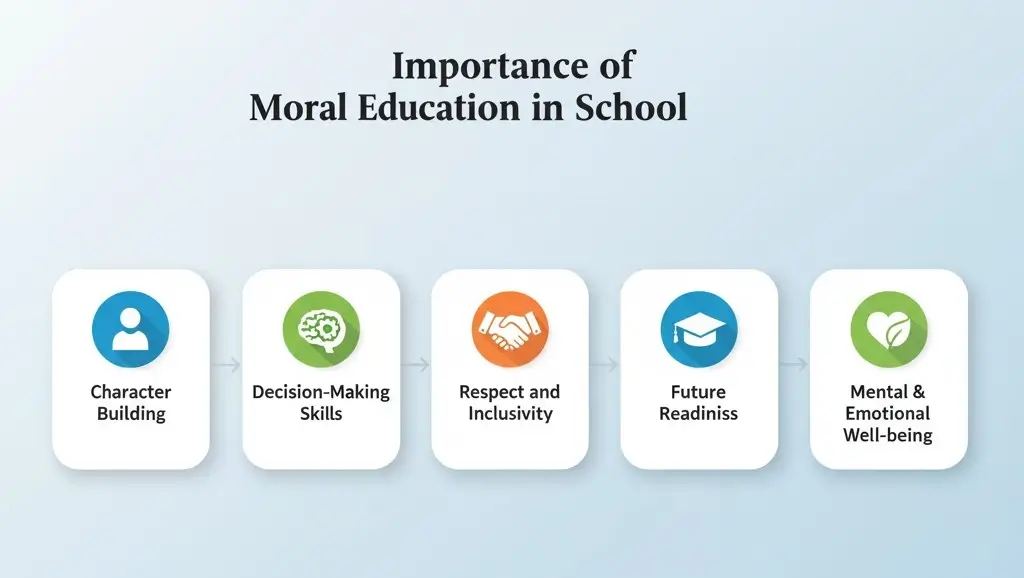
Moral education teaches students to understand the importance of moral values. Such values guide them throughout their life and give multiple benefits like character building, decision-making skills, preparing for the future, and protecting mental and emotional well-being.
Here are some factors that explain the need for moral education in school:
1. Character building:
One of the most beneficial parts of moral education is that it helps in the character building of your child. Developing moral values in schools, like honesty, responsibility, and more, helps students build a strong character or personality.
2. Enhances decision-making skills:
Moral education helps students analyze situations and handle them with calm and composed behavior, and not impulsively. This gives your child the power to identify right and wrong decisions and become a smooth decision-maker.
3. Encouraging Respect:
India is a country of diversity with people and cultures from all over the world. In this case, moral education helps students learn to respect and be inclusive of different cultures, views, and opinions, building a peaceful society.
4. Prepare students for the future:
Being good at academics is great for career building and jobs, but students with moral values are better thinkers and builders of the future.
Moral education provides students with the knowledge to handle conflicts or make decisions in confusing situations.
It also helps students to sustain and face real-life challenges.
5. Mental and emotional well-being:
Moral values like patience, gratitude, and kindness among students help students handle exam-related stress or anxiety. Hence, these values help them protect their mental and emotional well-being.
Key Values Taught in Moral Education
The importance of moral education can be seen in the behavior of a child. Moral values like honesty, respect, and kindness help students to improve their attitude, academics, and approach toward a better life.
Here are some key moral values taught in schools:
- Honesty: Always speaking the truth and acting with integrity is one of the most important moral values that is taught in schools through various activities.
- Respect: Schools organize debate competitions, group discussions, and many activities that teach students to listen patiently and give value to others’ opinions as well. Giving value to others’ opinions, rights, and differences makes a student a respectful individual.
- Kindness: While eating, playing, and learning, students learn to help each other. This infuses kindness in them.
- Responsibility: Taking ownership of actions and duties is also taught by teachers in school.
- Courage: Standing up for what is right, even in difficult situations, makes a child bold and courageous.
- Gratitude: Appreciating others, their efforts, and being grateful for what you have is another important moral value taught by teachers in school.
Role of Teachers and Schools
Teachers build the foundation of moral values among students. Children see their teachers as their role models and take inspiration from their behavior.
They observe everything about their teachers, like how they treat others, how much respect they give, and whether they are kind or not.
That’s why it is important to choose the right school, where teachers take the initiative to build moral values and understand the need for moral education in school and its impact on students’ overall development.
At Haryana Public School (HPS), Narnaul, we shape our students into confident, respectful, and kind individuals who make positive contributions to society.
So if you are looking for a school that doesn’t burden your child with textbooks, promotes extra-curricular activities, and moral education, then HPS is the ideal choice for your child.
For more information, visit https://www.hpsnarnaul.co.in/
FAQ’S:
1. What is moral education in schools?
Moral education in schools is about teaching essential moral values like honesty, kindness, respect, and responsibility.
2. Why is moral education important for students?
Moral education helps students become disciplined, respectful, and kind human beings.
3. How can schools teach moral values effectively?
Schools play a major role in teaching moral values through stories, discussions, and group projects.
4. What are some examples of moral values taught in schools?
Examples of moral values taught in schools include honesty, respect, responsibility, tolerance, and gratitude.
5. How does moral education benefit society?
Moral education among students helps maintain a positive and peaceful environment.