Imagine your child happily waving goodbye at the classroom door, curious and excited to explore different activities and make new friends. Sounds like a dream, right? But how do you know if your child is truly ready for this big step?
Many parents like you struggle with this decision. You might wonder if your kid is too young or if waiting another year would be better. The truth is, recognizing the signs your child is ready for preschool can make a lot of difference in their early learning journey.
According to the India Early Childhood Education Impact Study (2011-2016) conducted by the ASER Centre across rural areas of Rajasthan, Assam, and Telangana, early learning experiences shape children’s educational and behavioral outcomes. It also emphasizes that enrolling kids in preschool at the right developmental stage creates a strong foundation for their long-term academic success.
However, every child has a different capacity to observe the concepts & adapt to the learning environment at the beginning, and to better understand this, this blog will help you identify the key signs your child is ready for preschool or not.
What Does “Preschool Readiness” Mean?
Preschool readiness is not about your kid knowing their ABCs or being able to count from one to thirty perfectly. Instead, it refers to a stage of development where a child is physically, mentally, and socially prepared to take part in a classroom away from home. It’s about their ability to engage with peers, follow a simple routine in the day, and manage their basic needs with minimal assistance.
Ideal Age for Preschool Admission
As there is no exact answer for this question, most kids are ready for preschool between the ages of 2.5 to 4 years. According to the National Education Policy (NEP) 2020, Early Childhood Care and Education (ECCE) starts from the age of 3, as these foundational years play a crucial role in shaping lifelong learning and development.
However, age is just one factor. Your child’s individual growth matters more than the number of birthdays they have celebrated.
Why Preschool Readiness Matters
Sending your kids to preschool before they are ready can result in unnecessary anxiety and stress. They might struggle to adjust, feel overwhelmed, or develop negative feelings about school.
On the other hand, when your child is actually ready, preschool becomes a joyful experience. They make friends easily, engage in different activities, and build confidence with every small achievement.
Therefore, preschool readiness matters because your child benefits from the early learning opportunities. Here, they don’t just survive; they explore and develop skills that will help them throughout their educational journey.
Key Signs Your Child Is Ready for Preschool
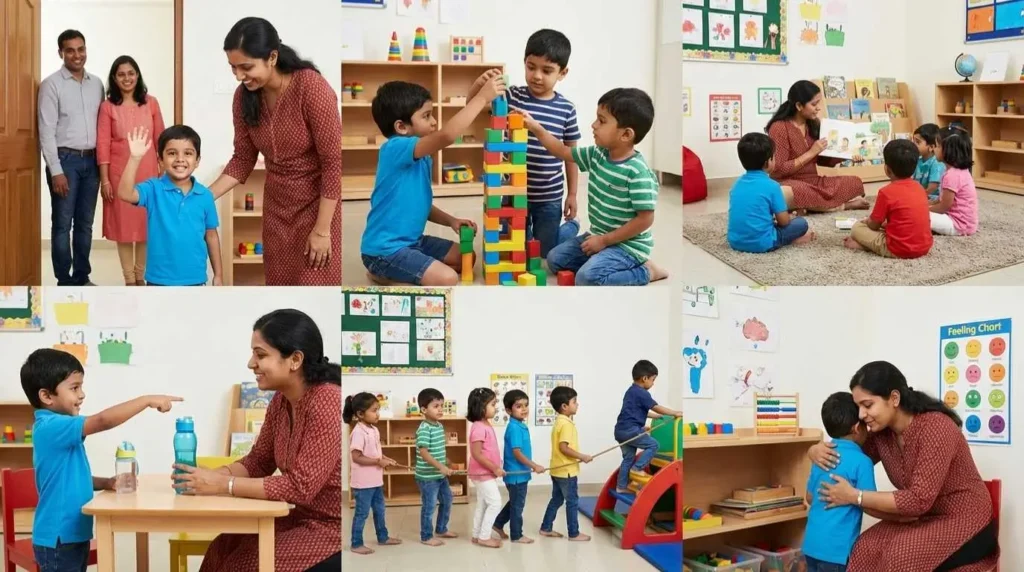
Let’s deep dive into the few key signs that help you understand that your child is ready for preschool:
1. Can Stay Away From Parents for Short Periods
This is the most important sign that if your child can comfortably spend a couple of hours at a relative’s house or with a caretaker without constant anxiety, then they are likely ready for preschool.
You might notice they are okay with you stepping out of the room or can play independently. This doesn’t mean they won’t be anxious on the first day of school. They might cry, and that’s completely normal. But if they have developed the ability to adapt to your absence, then it’s a good sign that they can adjust in the classroom environment.
2. Shows Interest in Other Children
Does your child light up when they see other kids at the park? Do they try to join them? This natural curiosity about peers is a strong readiness sign. As preschool is all about social interaction. If your child shows interest in making friends, sharing toys, or simply observing what other children are doing, they are likely to survive in a classroom setting.
3. Basic Communication Skills
Your child doesn’t need to speak perfect sentences, but they should be able to express their feelings. Can they tell you when they are hungry, thirsty, or need to use the bathroom? Can they let you know if something is bothering them?
If yes, then it’s a positive sign that they are ready to join preschool, because in the classroom, teachers need to understand what your child needs, and your child is comfortable expressing themselves.
4. Follows Simple Routine
If your child can follow simple daily routines at home, like washing hands before meals or putting shoes in the shoe rack after coming home, this means they are showing readiness for daily activities.
In preschools kids have to follow a routine like playtime, snack time & study time. If kids can handle these basic routines, then they can adjust at preschool easily.
5. Curiosity and Willingness to Learn
Does your child ask lots of questions, like why, when , where? And do they get excited about new activities, like visiting a new park or trying a new food? If yes, then this curiosity is a sign of readiness for a preschool setting. And now, you can think about searching for the right school for your child that focuses on academics and extracurricular activities equally.
6. Emotional Regulation Is Developing
Children throw tantrums in early childhood, but how your kid handles them says a lot about their emotional growth. If they get aggressive sometimes at home but can stay calm outside or in front of guests, then it’s a positive sign that they are learning to manage their emotions.
Similarly, if they recover quickly from small disappointments and their reactions are becoming less frequent or shorter, then this indicates that your child is ready mentally & emotionally.
7. Physical Readiness
Preschool involves many activities like jumping, running, or holding a crayon and attempting to scribble or draw. If your kid can do these small activities with small breaks, then it’s a good sign.
Also, if your child has the stamina to play for a few hours without needing a long nap immediately and can manage basic tasks like washing hands or pulling up their pants, they are physically ready to get settled in a preschool setting.
Signs Your Child May Need More Time
Read more: Importance of Co-Curricular Activities in School Education
It is important to recognize when your child might not be ready for preschool, and here are some signs that waiting a bit longer could be beneficial:
- Extreme Separation Anxiety: If your kid becomes inconsolable when they are far from you, even for very short periods, then they might not be ready for preschool.
- Limited interest in peers: If your child is consistently ignoring other kids or shows no interest in making new friends, then they might need more time to develop socially.
- Very short attention span: All toddlers have limited attention spans, but if your kid is not focused on any activity for even a few minutes, then they may struggle with structured preschool activities.
- Health concerns: If your child has any health issues that need constant monitoring, then you should discuss with your pediatrician whether delaying preschool might be better for their overall well-being.
- Communication Barriers: If your child cannot express their basic needs to anyone other than you, then they need some more time to develop communication skills.
How Parents Can Prepare Their Child for Preschool
Once you have identified that your kid is ready, then you can take these simple steps to prepare them for preschool:
- Establish routines at home: You should create consistent morning routines, meal times, and bedtime schedules for your child. This helps them understand structure and predictability.
- Trial Separations: You should leave your child with friends or trusted family members for some time so that they develop a habit of staying away from your presence.
- Encourage Independence: Let your child make a practice of putting shoes in the shoe rack, washing their hands, and carrying a small backpack. These small tasks build confidence, which makes them independent.
- Visit the Campus: You can bring your child to the school playground, as it helps them feel familiar with the school’s structured environment.
How HPS School Supports Preschool Readiness
At Haryana Public School, Narnaul, we know that preparing a child from an environment of homely living to a scheduled school day is a big step. That’s why we have designed our preschool classes to support kids at every stage of early learning. Our play-based learning approach ensures that kids learn through exploration and creativity, and not from forced studies.
At HPS, we provide dedicated spaces for art and craft, music and dance, discovery-based activities, and various sports activities to support the overall development of a child. Our teachers understand that every child is unique and learns at their own pace. So, with individualized attention and support, we nurture preschool readiness in your child and ensure they receive the right care, guidance, and encouragement.
Conclusion
Recognizing the signs your child is ready for preschool is about observing their overall growth and not just their age. When your child can handle short separations from you, takes an interest in making new friends, follows basic routines, and shows curiosity for learning, then congratulations, they are ready to join preschool and take new experiences.
You should also remember that preschool readiness varies for every child. Some kids are ready earlier, while others need some more time, and both paths are perfectly fine. What matters most is making a decision based on your child’s needs and development.
Moreover, at HPS, we are committed to providing a nurturing and safe environment where your child can explore, learn, and grow. To apply for admission, you can visit HPS, Narnaul, or contact 8199965994.
Let’s work together to give your child the strong foundation they deserve for lifelong learning and success.
FAQs:
Q1. How do I know my child is ready for preschool?
You can focus on signs like basic independence, the ability to follow simple instructions, and a growing interest in playing with other kids.
Q2. Is age the only factor for preschool admission?
No, age is just a guideline. Pre-school involves social, emotional, and physical readiness, which is much more important than the exact birth date.
Q3. Can shy children attend preschool?
Absolutely! Preschool is often the best place for shy kids to build confidence in a structured and supportive environment.
Q4. What skills should a child have before preschool?
Your child should have basic skills like expressing needs verbally, following a simple routine, and a bit of curiosity are usually enough to start.
Q5. How does preschool benefit children?
It boosts social skills, encourages independence, and prepares them for the structure of Grade 1.